| Password | Health Literacy | Score (%) |
|---|---|---|
| $iorrZZ2425! | 4.71 | 87% (high) |
| '@Auliebear224757328el | 4.25 | 71% (high) |
| 5121lyster | 3.33 | 13% (low) |
| 78fArO50r | 3.33 | 13% (low) |
| Arlingtonfootball(333) | 3.25 | 8% (low) |
| Benny2013 | 4.14 | 66% (mid) |
| Binghamton1234 | 4.62 | 84% (high) |
| Birth2005 | 3.00 | 0% (low) |
| Biscuit1227 | 4.50 | 79% (high) |
| Bxqc3216 | 3.50 | 21% (low) |
| Damilola1976 | 4.75 | 89% (high) |
| December1912 | 3.50 | 21% (low) |
| Eski3754 | 4.88 | 97% (high) |
| Funkita732 | 5.00 | 100% (high) |
| Goodwin7292()! | 4.00 | 47% (mid) |
| Health$402 | 3.62 | 29% (low) |
| Health1203 | 4.00 | 47% (mid) |
| Littlekitty1019 | 3.75 | 42% (mid) |
| LongSurvey1234 | 3.88 | 45% (mid) |
| Power2 | 4.14 | 66% (mid) |
| Rcool1229 | 3.50 | 21% (low) |
| Strawberryhamburger3 | 4.12 | 61% (mid) |
| Tinawatsonqwe1 | 4.00 | 47% (mid) |
| VT1107lyn!Bing | 3.29 | 11% (low) |
| biotinISneeded2313! | 4.75 | 89% (high) |
| brita6767 | 4.29 | 76% (high) |
| earth5567 | 3.62 | 29% (low) |
| ha1rcut | 4.12 | 61% (mid) |
| health0925 | 3.62 | 29% (low) |
| health1244 | 4.00 | 47% (mid) |
| health1248 | 3.00 | 0% (low) |
| health4103 | 3.38 | 18% (low) |
| jelly1909 | 4.25 | 71% (high) |
| kyunkyun3890 | 4.75 | 89% (high) |
| schre0000 | 3.62 | 29% (low) |
| surv1901 | 4.00 | 47% (mid) |
| vidyaravi1 | NaN | NA% (high) |
| water6331 | 4.57 | 82% (high) |
| water9813 | 3.00 | 0% (low) |
| witch2026 | 3.62 | 29% (low) |
4 Health Literacy
This chapter focuses on health literacy — your ability to find, understand, evaluate, and use health information. Health literacy is a critical determinant of health communication effectiveness because it shapes how audiences engage with health messages, navigate health systems, and make informed decisions.
ImportantPH 322 — Week 4: Audience Profile Based on Health Literacy & Misinformation
This week explores how health literacy levels influence the accessibility and impact of health messages. Your health literacy score helps you understand your own capacity and recognize how to design messages for audiences with varying literacy levels.
4.1 Health Literacy Scale
Constructs
The Health Literacy Scale (Abel et al., 2015) measures your self-assessed ability to navigate health information. Health literacy encompasses the knowledge, motivation, and competencies needed to access, understand, appraise, and apply health information in everyday life.
Measures
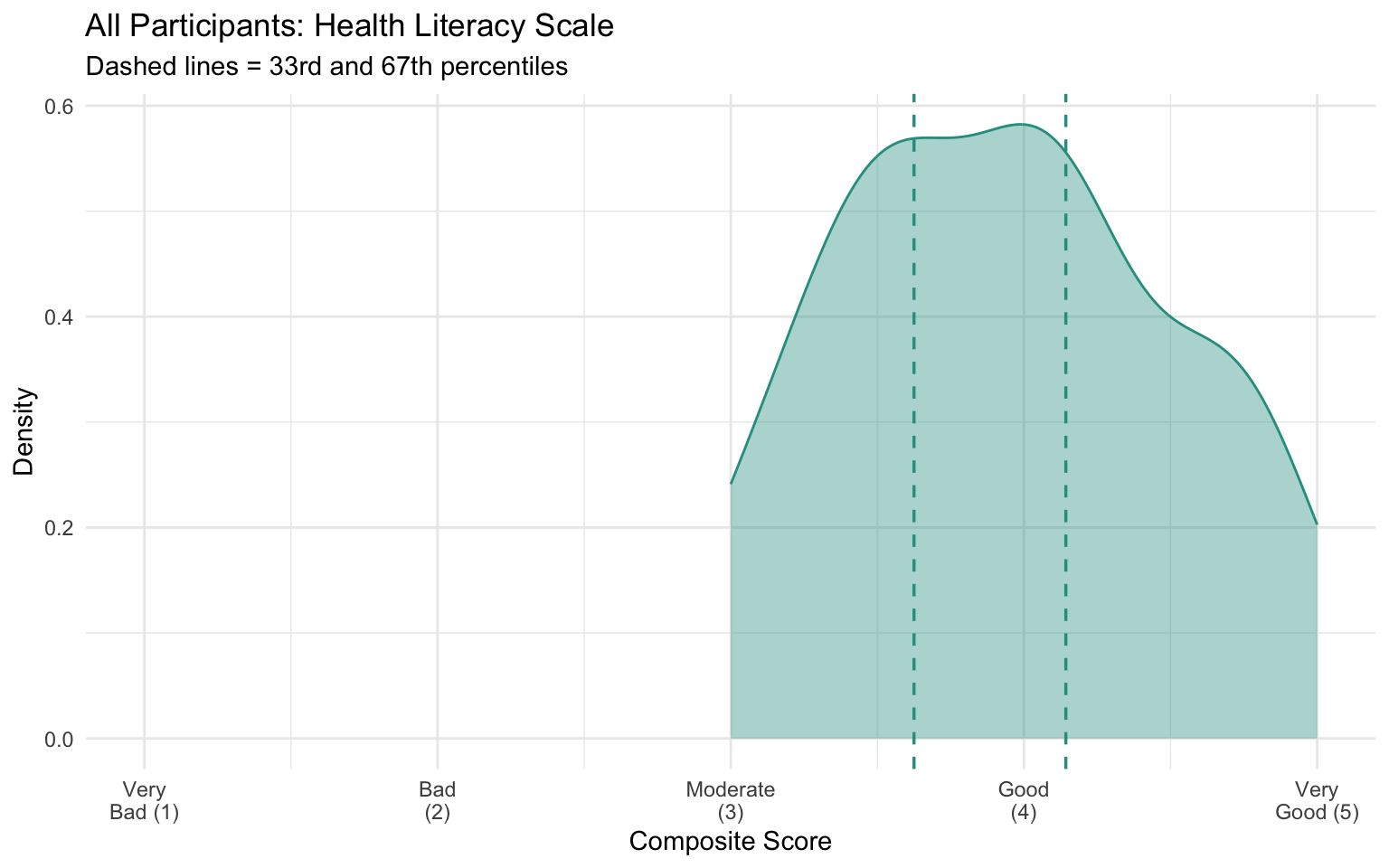
The scale contains 8 items rated on a 5-point scale: 1 = Very Bad, 2 = Bad, 3 = Moderate, 4 = Good, 5 = Very Good. Higher scores indicate higher self-reported health literacy. Participants who selected “I do not make use of this kind of information” are coded as missing.
Example items:
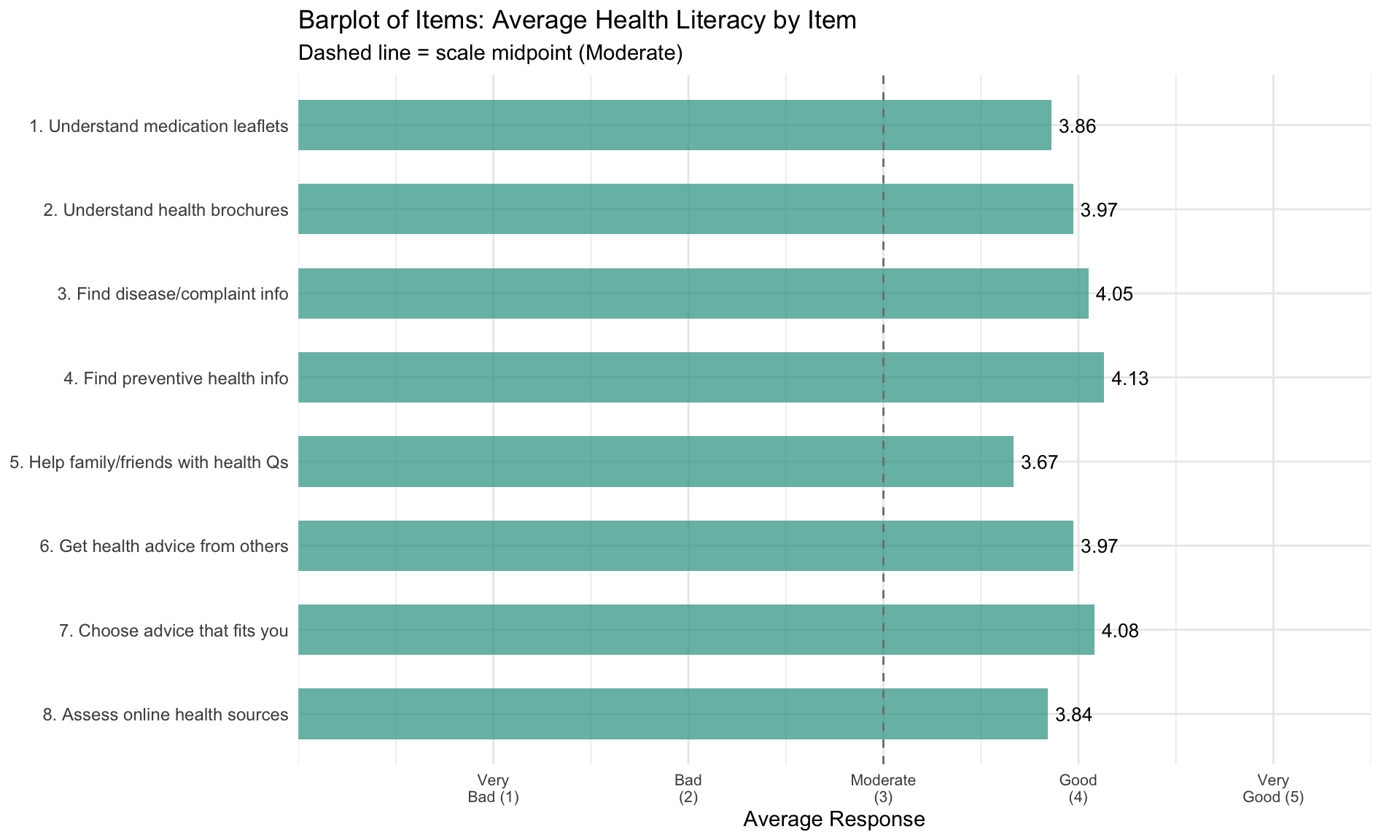
- “How well do you understand instruction leaflets for medication?”
- “How well do you understand information brochures on health issues?”
- “When I have questions on diseases or complaints, I know where I can find information on these issues.”
- “When I want to do something for my health without being sick, I know where I can find information on these issues.”
- “How often were you able to help your family members or a friend if they had questions concerning health issues?”
- “When you came up with questions concerning health issues, how often were you able to get information and advice from others (family and friends)?”
- “How well are you doing in choosing the advices and offers that fit with you the most?”
- “Regarding information on health on the Internet, I’m able to determine which sources are of high and which of poor quality.”
Your Scores
Find your password below to see your Health Literacy composite score.
Class Distribution
NoteMisinformation Susceptibility
Want to test your ability to detect misinformation? Take the Misinformation Susceptibility Test (MIST) online to see how well you can distinguish real from fake news headlines.